
What am I looking at?
Mendon sits on the Worcester County uplands at the edge of the Blackstone River Valley. Acidic oak–pine woods, kettle ponds, and WMA wetlands shape what shows up on the trail: orchids on dry ridges, wood ducks on quiet impoundments, and bracket fungi on old oaks.
Use this guide with the town's Trails & Passive Recreation listing, the town's invasive non-native plants guidance and our trail pages for on-the-ground context. For gear, field habits, and apps like Seek, Merlin, and PlantNet, see Be prepared. Photos are reference images — always confirm ID in the field.

In Mendon
- Mendon Town Forest — acidic pine–oak understory along the Wigwam Hill loop and side spurs.
- Upland oak woods in the Blackstone Valley plateau; often within a few yards of old stone walls.
Field marks
Solitary pink “moccasin” flower on a leafless stalk; two broad basal leaves often visible. Massachusetts native orchid — illegal to pick or dig; photograph only.
Habitat: pine–oak forest, acidic, well-drained humus, shade at bloom time

In Mendon
- Mendon Town Forest — sunny pockets and rocky knobs on Wigwam Hill and connecting ridges.
- Cormier Woods — hemlock–oak transitions where laurel often forms dense thickets.
Field marks
Evergreen-looking shrubs with smooth, oval leaves in whorls; late spring clusters of pink-and-white cup flowers. Common on Worcester County uplands — blooms slightly earlier in sunnier openings.
Habitat: dry ridgelines, oak forest, edges of rocky slopes
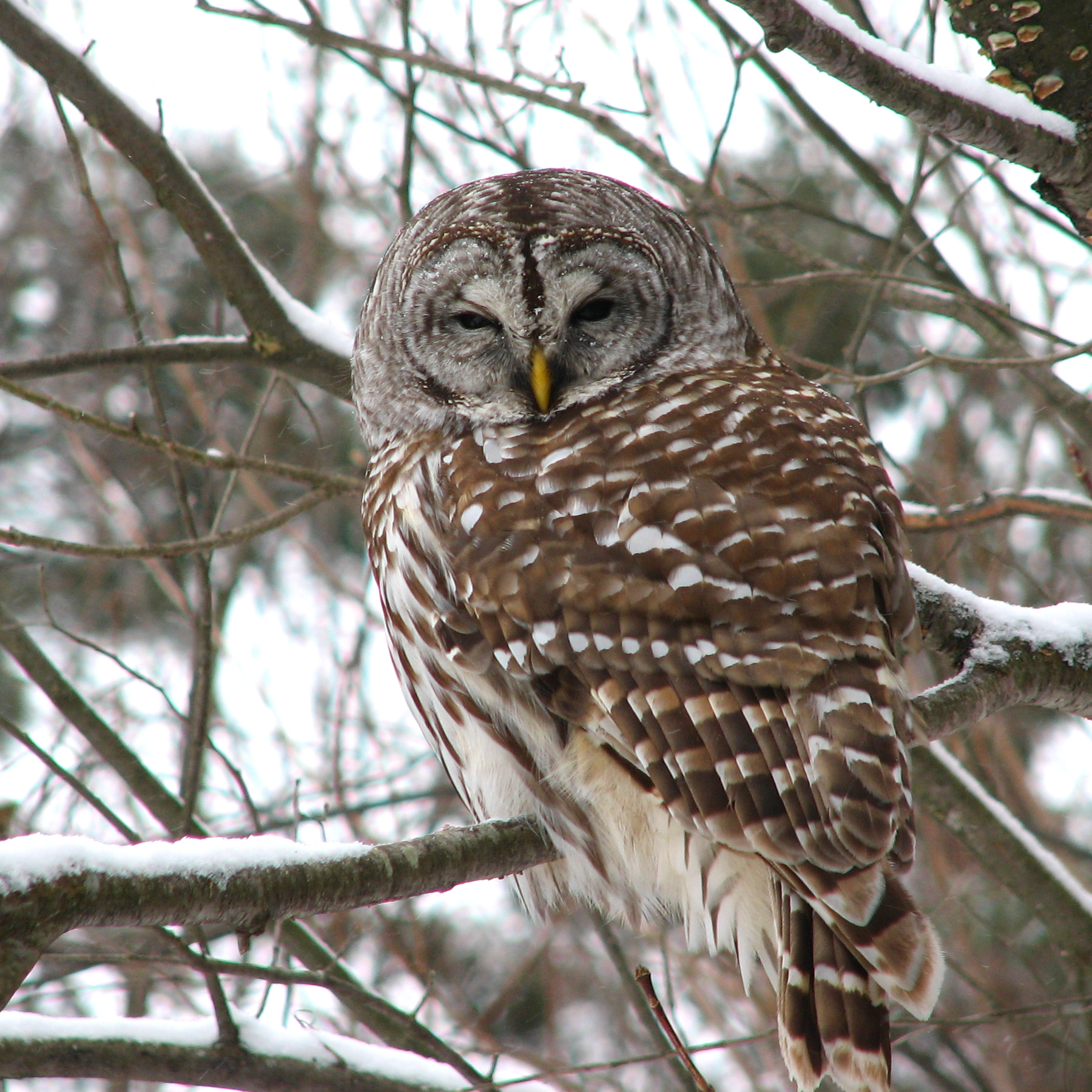
In Mendon
- Quissett Wildlife Management Area — wooded wetlands along the East Trail, Round Meadow, and Old Quissett corridors.
- Meadow Brook / Inman Pond — swamp forest and kettle-pond edge where barred owls hunt wood ducks and small mammals.
Field marks
Large brown-and-white owl with dark eyes; classic “Who cooks for you?” call at dawn and dusk. Often perches low along wooded streams.
Habitat: mature deciduous–mixed forest, swamp edge, beaver-influenced wetlands

In Mendon
- Inman Pond and associated beaver impoundments in the Meadow Brook Woods complex.
- Quissett WMA — wooded impoundments and slow reaches where wood ducks raft up.
Field marks
Male: iridescent green head with bold white face stripes. Female: gray-brown with teardrop eye-ring. Listen for squealing flight calls at dusk.
Habitat: wooded swamps, vernal pool complexes, quiet pond backwaters
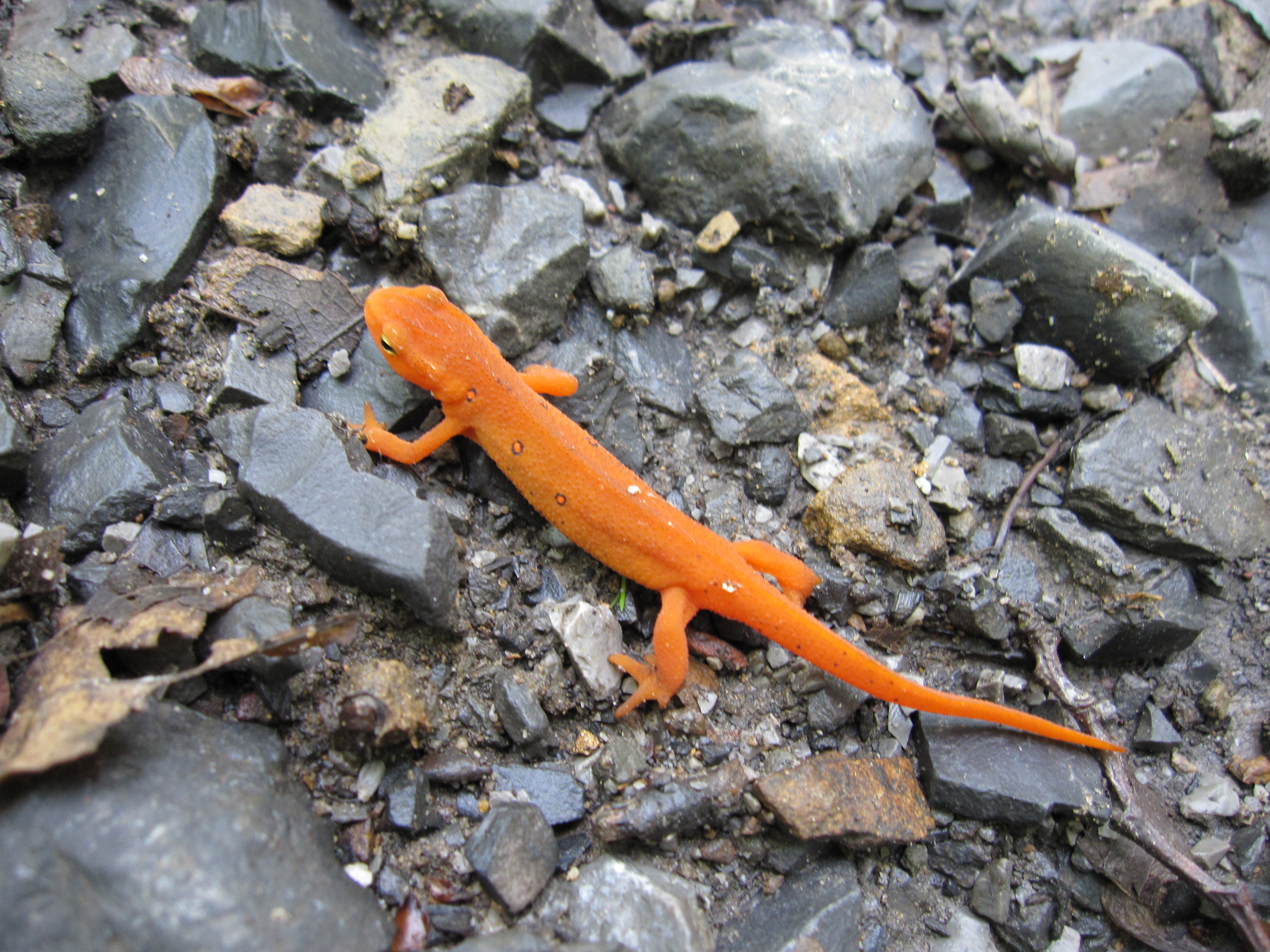
In Mendon
- Meadow Brook corridor — kettle topography and seasonal wetlands support pool-breeding amphibians.
- Mendon Town Forest — boardwalk-adjacent pockets and low ground after spring melt.
Field marks
Terrestrial “red eft” stage: bright orange-red with darker-bordered spots — slow-moving on trails after rain. Do not handle; oils on skin can harm amphibians.
Habitat: moist forest floor, vernal pool margins, rocky seeps
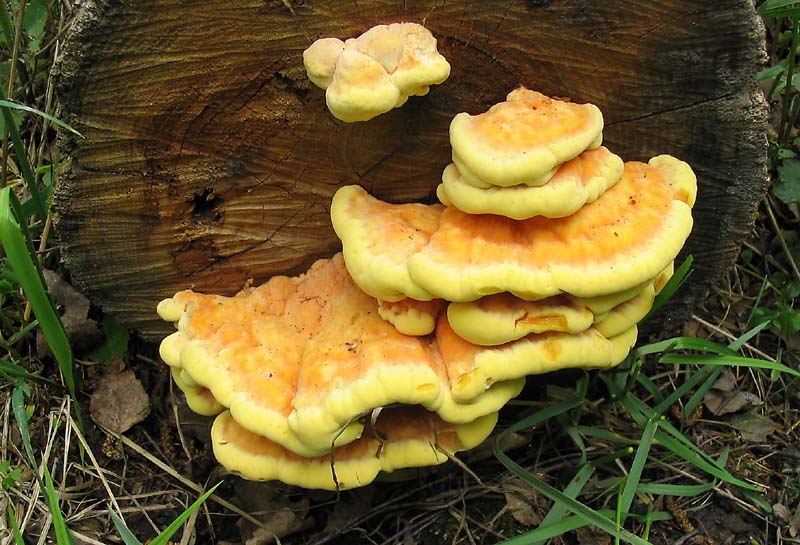
In Mendon
- Cormier Woods — mature oak and hemlock stands with abundant coarse woody debris.
- Mendon Town Forest — oak-dominated slopes where downed trunks host perennial brackets.
Field marks
Overlapping orange shelves with sulfur-yellow pore surface underneath. Always confirm ID with a trusted guide — some look-alikes cause GI distress.
Habitat: living or dead oak, downed hardwood, wounded tree bases

In Mendon
- Meadow Brook Woods — dense clumps line the boardwalk sections and beaver-impounded swamp edges; one of the most visible plants on the Inman Pond loop.
- Quissett WMA — wetland margins along the East Trail and Round Meadow corridor; look for the upright cinnamon fronds in the open.
Field marks
Large vase-shaped clumps; fertile fronds emerge first, turning cinnamon-brown and spore-bearing by early summer. Sterile fronds stay green with a tuft of cinnamon-colored wool at each pinna base — the reliable field mark.
Habitat: wetland margins, vernal pool edges, wooded swamp borders, stream banks
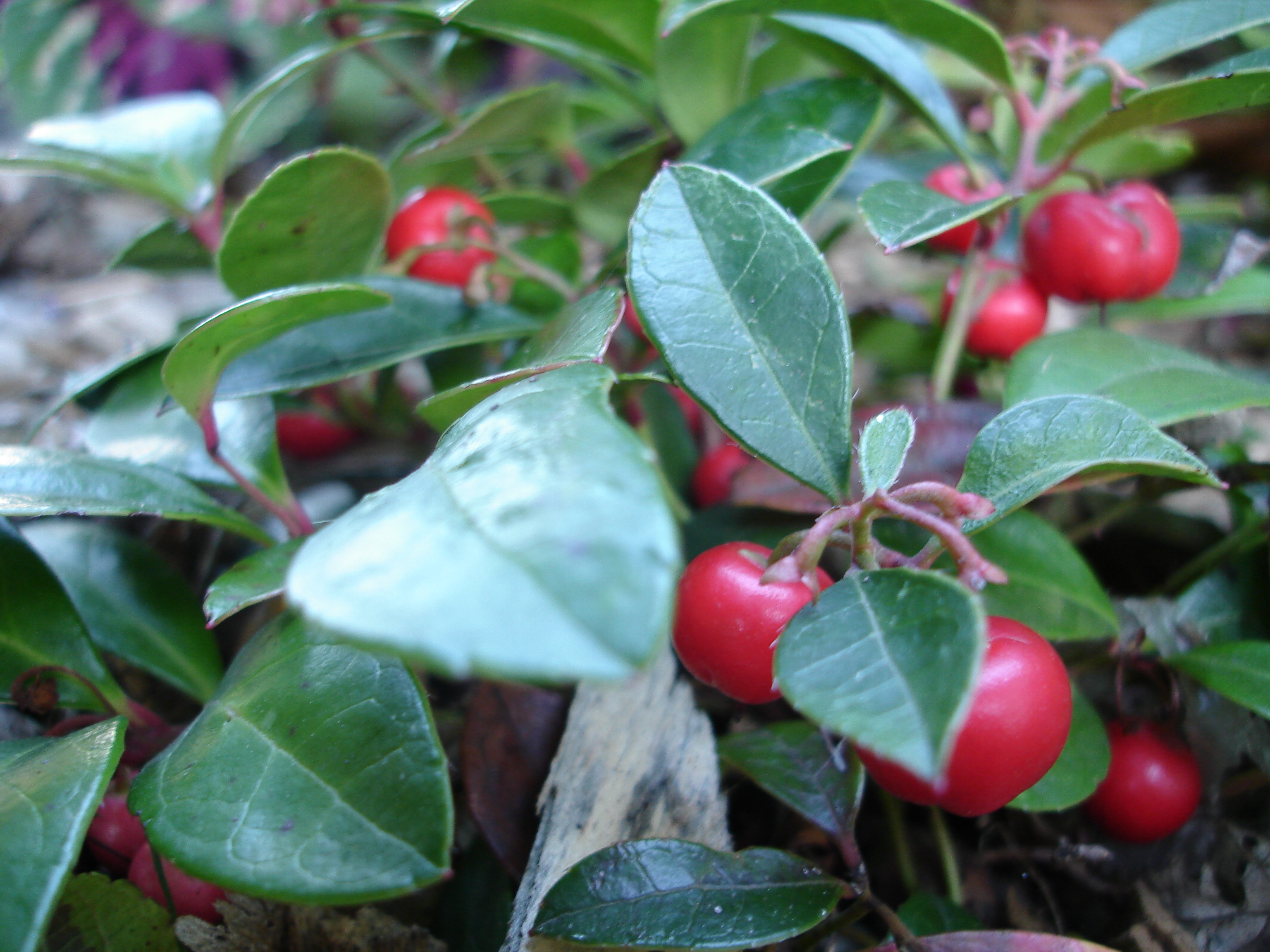
In Mendon
- Mendon Town Forest — among the most reliable groundcover species on the Wigwam Hill and Anchor Rock trails; look between pine roots and along sandy ridgetop sections.
- Cormier Woods — carpets the dry, hemlock-oak forest floor, especially on the south-facing rock ledge areas.
Field marks
Low creeping groundcover with thick, glossy evergreen leaves and bright red berries persisting through winter. Crush a leaf for a distinctive wintergreen (methyl salicylate) scent — unmistakable. Tiny white urn-shaped flowers appear in July.
Habitat: acidic pine–oak forest floor, dry upland hardwood understory, rock ledge pockets

In Mendon
- Quissett WMA — dense shrub thickets along the East Trail and impoundment edges; fruit ripens in late July when MassWildlife allows incidental foraging.
- Meadow Brook Uplands — wet depressions and acidic swale edges along the upland trail system support large fruit-bearing colonies.
Field marks
Multi-stemmed shrub to 10 feet; white bell-shaped flowers in May, blue-black fruit July–August, brilliant scarlet fall foliage. The species behind commercial blueberries, but wild fruit is smaller and tangier.
Habitat: wetland shrub thickets, acidic bog and pond margins, wet forest openings

In Mendon
- Quissett WMA — lines the shrub-swamp margins of the East Trail corridor; the fragrance carries on warm mornings in July.
- Meadow Brook Woods — found alongside Cinnamon Fern at beaver-flooded swamp edges near the boardwalk sections.
Field marks
Deciduous shrub with clusters of white (sometimes pale pink), tubular, intensely fragrant flowers; sticky-hairy tubes are the key field mark separating it from other native azaleas. Blooms after leaves are out — mid-summer, later than Mountain Laurel.
Habitat: shrub swamps, wetland borders, acidic pond margins
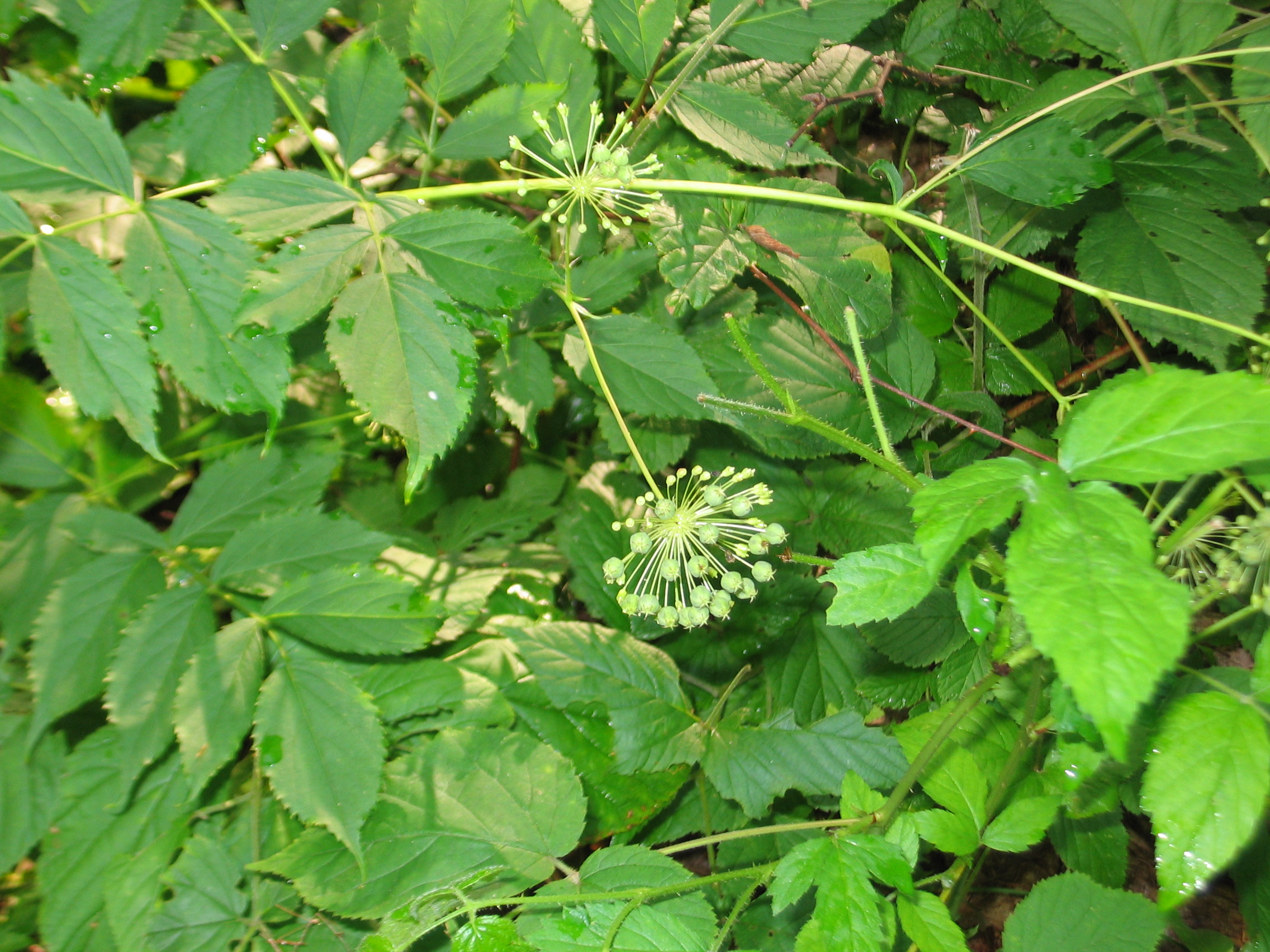
In Mendon
- Mendon Town Forest — one of the most common herbaceous plants along the Anchor Rock Trail; look for the distinctive single-leaf-with-separate-flower-stalk combination.
- Cormier Woods — abundant in the dappled light of hemlock–oak transitions; the berry clusters attract thrushes in late summer.
Field marks
Single compound leaf on a long stalk, divided into three groups of five leaflets — easy to mistake for a small tree seedling. A separate leafless stalk bears spherical clusters of tiny white flowers in June, followed by dark purple berries. Roots historically used as a sassafras substitute.
Habitat: mixed and deciduous forest understory, shaded hillsides, forest road margins

In Mendon
- Meadow Brook Woods — seep hollows and stream-margin flats along the lower Inman Pond corridor; look for spathes rising from standing water in late February.
- Quissett WMA — wet depressions near trail junctions hold dense patches; the large summer leaves mark the same wet spots visible in spring.
Field marks
Mottled purple-green spathe (hood) emerges directly from mud in late winter — often pushing up through ice. Giant cabbage-like leaves follow in April. Generates heat (thermogenesis) to melt surrounding snow. Unmistakable skunky odor when crushed.
Habitat: seeps and wet forest hollows, floodplain swamps, shaded stream margins

In Mendon
- Inman Pond and Meadow Brook Woods impoundments — reliable year-round; often seen standing in the shallows at the pond's open edge visible from the loop trail.
- Gaskill Meadows — hunts the open water and wetland margins; the shallow impoundments here concentrate fish, making it a consistent hunting ground.
Field marks
Largest heron in North America; stands 4 feet tall with a slate-blue back, white face, and black eye-stripe. Flies with neck folded in an S-curve — diagnostic in flight. Hunts fish and frogs by standing motionless in shallows.
Habitat: pond margins, beaver impoundments, slow stream edges, open wetlands
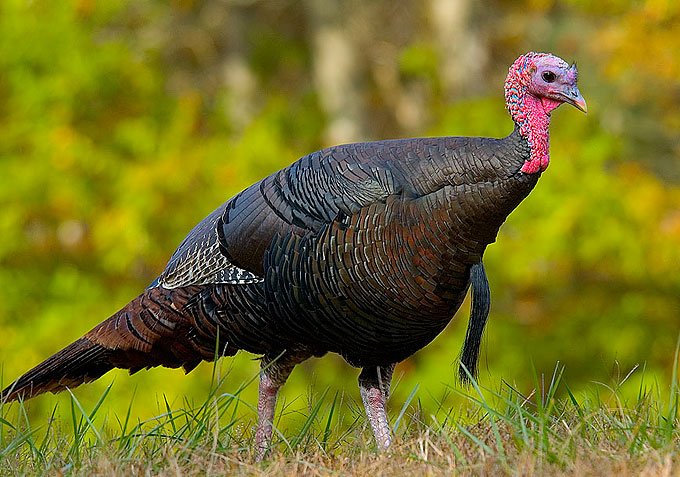
In Mendon
- Mendon Town Forest — flocks forage in the oak understory along the Wigwam Hill trails year-round; the dawn gobbling carries clearly from ridgetop roosts.
- Cormier Woods — commonly seen at the forest edge and in clearings; hen flocks with poults frequent the open margins in June.
Field marks
Large, dark, iridescent bird with a bare red-and-blue head; males display fan-shaped tails and prominent beards. Flocks scratch loudly in leaf litter. Often heard before seen; males gobble from roost trees at dawn in spring.
Habitat: oak–mixed forest, forest edges and clearings, open fields adjacent to woods

In Mendon
- Quissett WMA — beaver activity is responsible for the impoundments along the East Trail and Beaver Pond Loop; active lodges and fresh gnaw-cuts are visible from the trail.
- Meadow Brook Woods — the wetland complex at Inman Pond and the boardwalk sections exist in large part because of ongoing beaver engineering; look for lodges at the pond's far shore.
Field marks
North America's largest rodent; paddle-shaped tail and large orange incisors. Active at dawn and dusk — look for the V-shaped wake as it swims. Evidence is often easier to find than the animal: gnawed stumps, mud-and-stick lodges, and bark-stripped sticks in water.
Habitat: wooded stream corridors, pond outlets, slow rivers and impoundments

In Mendon
- Meadow Brook Woods — the kettle topography and certified vernal pools along the Inman Pond corridor are prime spotted salamander breeding habitat; egg masses visible in pools in April.
- Quissett WMA — woodland vernal pools in the East Trail and Round Meadow areas; migration routes cross the adjacent road — watch for salamanders on rainy March nights.
Field marks
Stout, dark (charcoal to black) body with two rows of bright yellow spots from head to tail. Adults reach 7–9 inches. Lives underground most of the year — emerges explosively on the first warm (above 45°F) rainy nights of late March to reach vernal pools.
Habitat: vernal pool complexes, forest floor near breeding pools, upland deciduous forest

In Mendon
- Gaskill Meadows — open impoundment provides ideal basking structure; rows of painted turtles often visible on sunny afternoons from the trail.
- Inman Pond at Meadow Brook Woods — sunny logs along the pond shore are a reliable spot for basking turtles throughout the warm season.
Field marks
Smooth, olive-to-black shell with red and yellow markings on the marginal scutes; red-striped neck. New England's most familiar basking turtle — lines up on logs and emergent vegetation on warm days, drops into water when approached.
Habitat: still ponds and impoundments, slow backwaters, sunny logs near wetland edges

In Mendon
- Mendon Town Forest — one of the most abundant breeding birds in the interior oak forest along Wigwam Hill; the loud, repetitive call is nearly constant on summer mornings.
- Cormier Woods — the mature, shaded forest interior here holds reliable nesting pairs; look for the ground-walking bird near the base of rock ledges.
Field marks
Warbler-sized but walks on the ground like a thrush; olive-brown back, streaked breast, and orange crown stripe bordered by black. The call — a ringing, escalating “teacher-teacher-TEACHER” — carries through the forest all summer and is far more often heard than the bird is seen.
Habitat: mature deciduous and mixed forest interior, shaded forest floor with leaf litter

In Mendon
- Mendon Town Forest — dry upland areas away from the wetland trails; most likely to be found in drier oak sections on summer mornings after rain.
- Meadow Brook Uplands — the dry forest and shrubby edges of the upland trail system provide the blueberry and other fruiting vegetation this turtle needs.
Field marks
High-domed shell with variable orange and yellow markings on brown or black background; hinged plastron allows it to close completely. Moves slowly; often found near berry patches. Massachusetts Species of Special Concern — do not relocate if found on a trail.
Habitat: dry upland deciduous forest, brushy clearings, forest edges with scattered shrubs

In Mendon
- Cormier Woods — abundant on downed hardwood throughout the trail system; nearly every large decaying log has at least one colony.
- Mendon Town Forest — oak-dominated slopes with heavy coarse woody debris support extensive turkey tail populations; look for them along the Anchor Rock Trail on fallen oak trunks.
Field marks
Thin, leathery, multi-colored concentric zones — tan, brown, rust, gray — fan out like a turkey's tail. The pore surface underneath is white or cream with tiny pores (not gills) — the critical check against look-alikes. One of the most common bracket fungi in New England and a good entry point for beginning foragers.
Habitat: downed hardwood logs, dead stumps, decaying tree bases


_(8082136397).jpg)


In Mendon
- Mendon Town Forest — mature oaks along the Wigwam Hill and Anchor Rock trail systems; look at the base of large-diameter oaks in late September.
- Cormier Woods — the old-growth oak and hemlock canopy provides ideal host trees; perennial fruiting sites often produce large specimens at the same stumps each fall.
Field marks
Large, overlapping rosette of gray-brown, fan-shaped fronds arising from a single base; white pore surface underneath. Can reach 30+ lbs. Grows reliably at the same oak's base year after year. Among the most sought-after edible fungi in Massachusetts — always confirm ID before consuming.
Habitat: base of mature oaks, oak stumps and buried oak roots