
Beaver Pond Loop
Wetland-edge loop circling an active beaver impoundment—often the start of a longer Inman Hill / Quissett outing. Trail 179 and the site map show miles of additional routes through the same complex; pairing this loop with the Quissett East Trail, ridge link, and other posted paths easily fills a couple of hours. Prime spring waterfowl and amphibian viewing; hunters use this area heavily in fall.
Elevation profile
What you might spot
 Wildlife
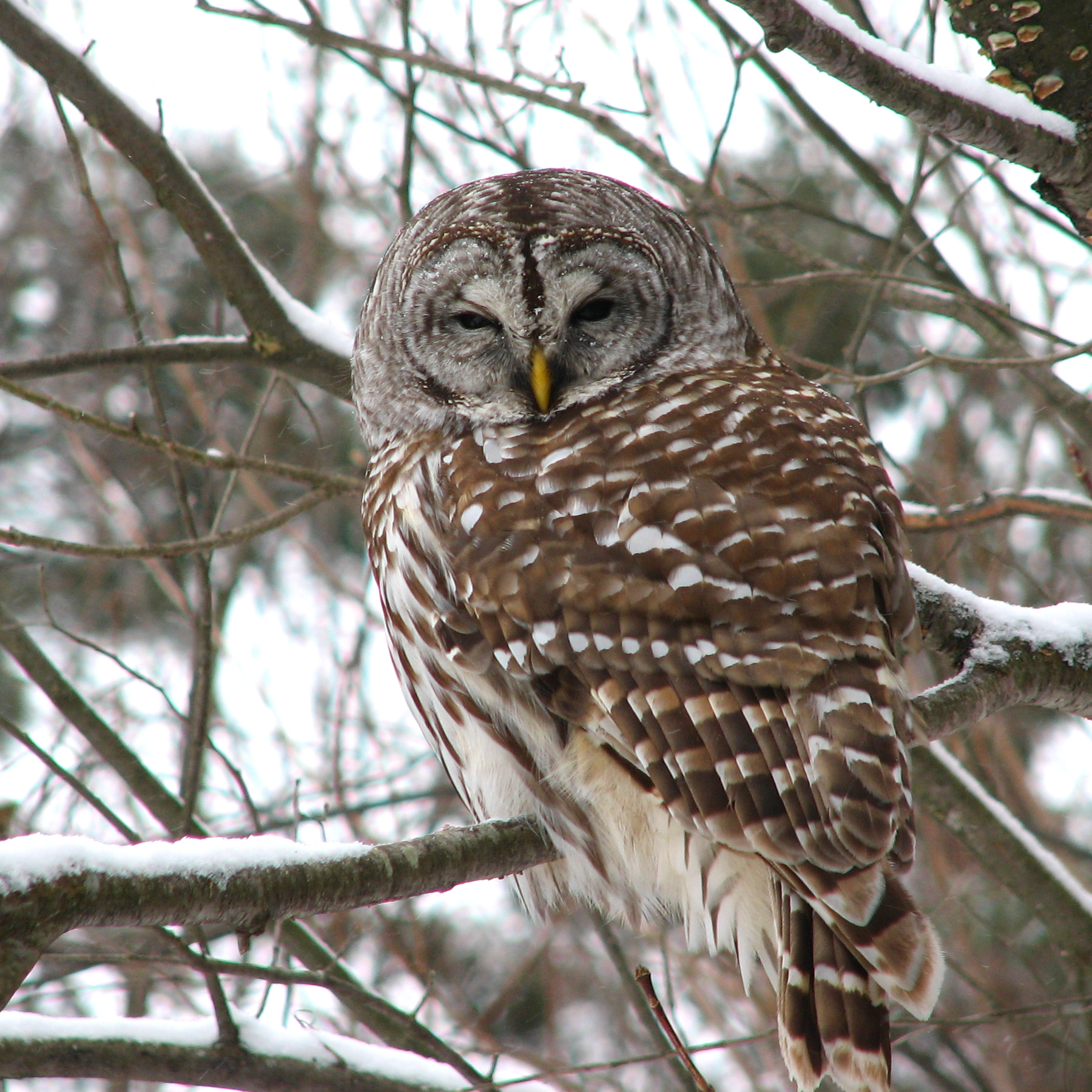
Barred Owl
Strix varia
Large brown-and-white owl with dark eyes; classic “Who cooks for you?” call at dawn and dusk. Often perches low along wooded streams.
Year-round resident; most vocal late winter through early spring
📍 Quissett Wildlife Management Area — wooded wetlands along the East Trail, Round Meadow, and Old Quissett corridors.
 Wildlife
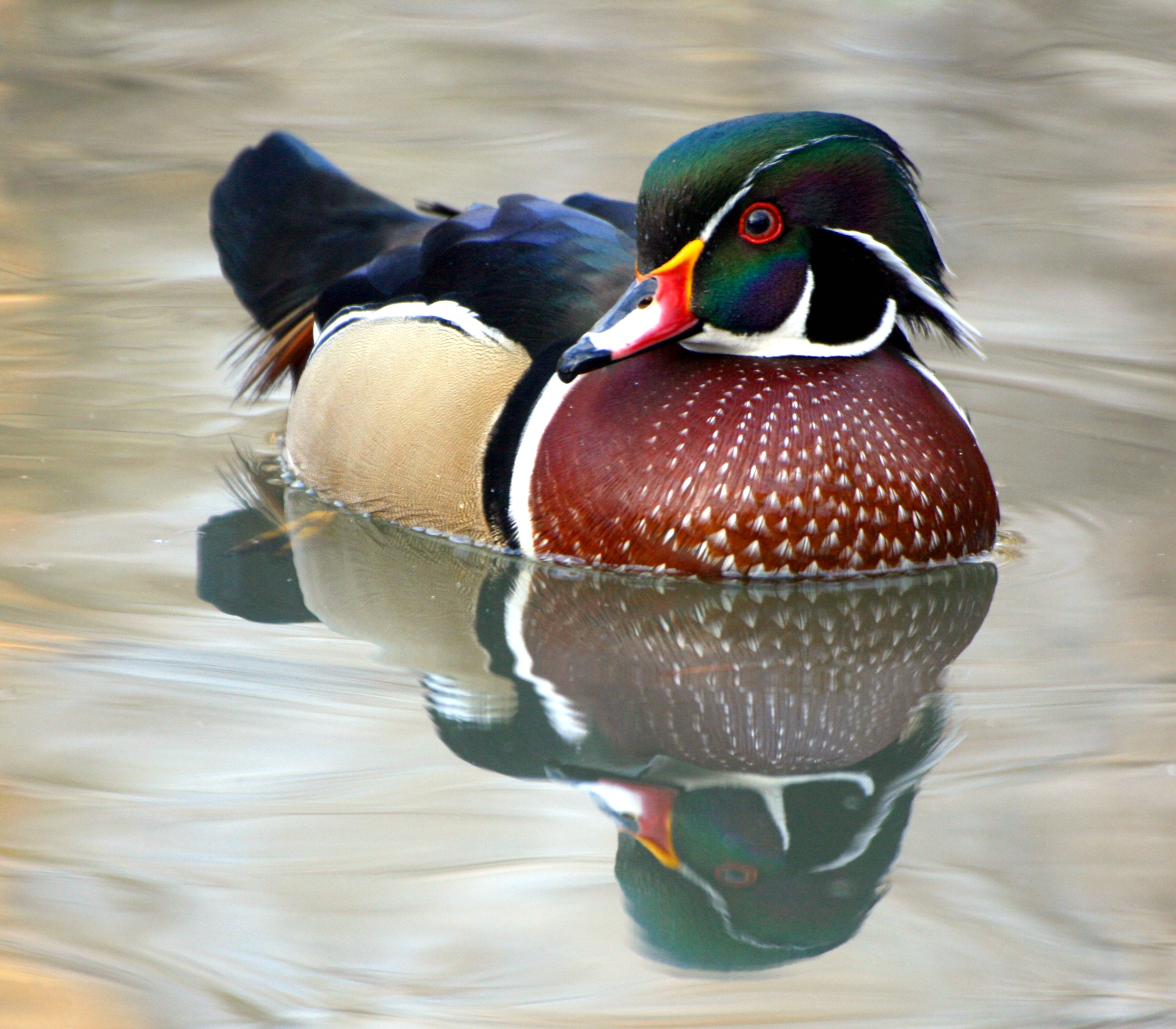
Wood Duck
Aix sponsa
Male: iridescent green head with bold white face stripes. Female: gray-brown with teardrop eye-ring. Listen for squealing flight calls at dusk.
Spring migration and nesting; broods on Mendon ponds May–July
📍 Inman Pond and associated beaver impoundments in the Meadow Brook Woods complex.
 Plant
PlantCinnamon Fern
Osmundastrum cinnamomeum
Large vase-shaped clumps; fertile fronds emerge first, turning cinnamon-brown and spore-bearing by early summer. Sterile fronds stay green with a tuft of cinnamon-colored wool at each pinna base — the reliable field mark.
Fronds emerge April; fertile fronds visible May–June; green through October
📍 Meadow Brook Woods — dense clumps line the boardwalk sections and beaver-impounded swamp edges; one of the most visible plants on the Inman Pond loop.
 Plant
PlantHighbush Blueberry
Vaccinium corymbosum
Multi-stemmed shrub to 10 feet; white bell-shaped flowers in May, blue-black fruit July–August, brilliant scarlet fall foliage. The species behind commercial blueberries, but wild fruit is smaller and tangier.
Flowers May; fruit July–August; fall color September–October
📍 Quissett WMA — dense shrub thickets along the East Trail and impoundment edges; fruit ripens in late July when MassWildlife allows incidental foraging.
 Plant
PlantSwamp Azalea
Rhododendron viscosum
Deciduous shrub with clusters of white (sometimes pale pink), tubular, intensely fragrant flowers; sticky-hairy tubes are the key field mark separating it from other native azaleas. Blooms after leaves are out — mid-summer, later than Mountain Laurel.
Blooms late June through July along Mendon wetlands
📍 Quissett WMA — lines the shrub-swamp margins of the East Trail corridor; the fragrance carries on warm mornings in July.
 Plant
PlantSkunk Cabbage
Symplocarpus foetidus
Mottled purple-green spathe (hood) emerges directly from mud in late winter — often pushing up through ice. Giant cabbage-like leaves follow in April. Generates heat (thermogenesis) to melt surrounding snow. Unmistakable skunky odor when crushed.
Spathe February–March (earliest wildflower in Mendon); leaves April–July
📍 Meadow Brook Woods — seep hollows and stream-margin flats along the lower Inman Pond corridor; look for spathes rising from standing water in late February.
 Wildlife
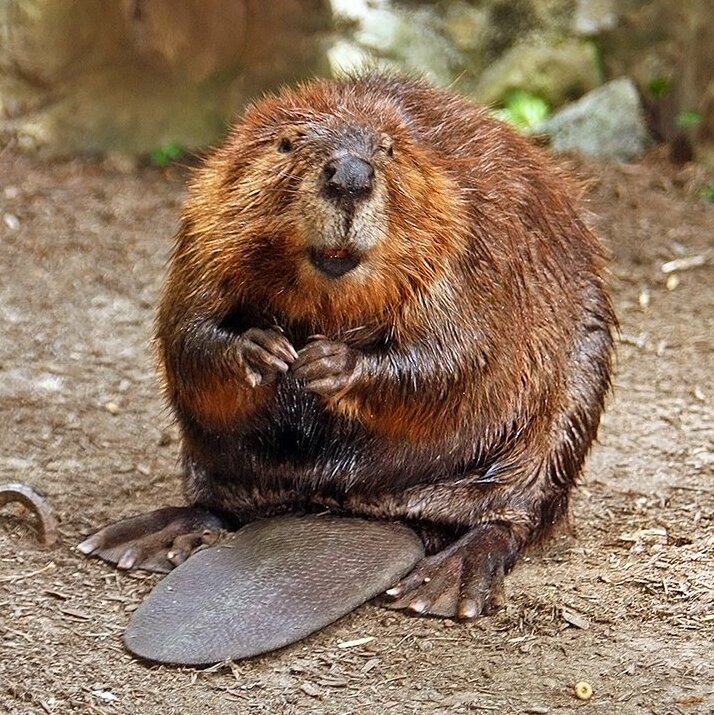
North American Beaver
Castor canadensis
North America's largest rodent; paddle-shaped tail and large orange incisors. Active at dawn and dusk — look for the V-shaped wake as it swims. Evidence is often easier to find than the animal: gnawed stumps, mud-and-stick lodges, and bark-stripped sticks in water.
Year-round; most visible at dawn and dusk spring through fall
📍 Quissett WMA — beaver activity is responsible for the impoundments along the East Trail and Beaver Pond Loop; active lodges and fresh gnaw-cuts are visible from the trail.
 Wildlife
Spotted Salamander
Ambystoma maculatum
Stout, dark (charcoal to black) body with two rows of bright yellow spots from head to tail. Adults reach 7–9 inches. Lives underground most of the year — emerges explosively on the first warm (above 45°F) rainy nights of late March to reach vernal pools.
Annual spring migration late March; egg masses in pools April–May; adults rarely seen other times
📍 Meadow Brook Woods — the kettle topography and certified vernal pools along the Inman Pond corridor are prime spotted salamander breeding habitat; egg masses visible in pools in April.
History in this area
Blackstone Heritage Corridor Era
1986Mendon's inclusion in the Blackstone River Valley National Heritage Corridor connected local conservation to a wider regional preservation strategy.
LAND, CPA, and the trail network you walk
How state and local programs helped stitch together the interconnected preserves the Town lists today.
Trail conditions
Spring vernal pool flooding on the eastern loop section near the beaver dam — rubber boots recommended through mid-May. Main fire road dry.
Reported April 22, 2026
Permitted uses
Wildlife Management Area: hunting is a primary authorized use — wear blaze orange during rifle season. No hunting on Sundays (MA law). Fishing with valid MA license. No motorized vehicles. Mountain biking permitted on fire roads; yield to all other users.
Surfaces
Accessibility
Max grade
7%
Firm surface
55%
Wetland edges and seasonal mud can reduce accessibility despite gentle grade.
History
The Quissett Wildlife Management Area — paired with the adjacent Inman Hill Conservation Land — encompasses roughly 312 acres of wetland, upland forest, and old agricultural fields in Mendon's southwestern quadrant. The land is managed by the Massachusetts Division of Fisheries and Wildlife (MassWildlife), whose primary mandate is wildlife habitat enhancement. That history shapes every trail: the wide gravel fire roads, the brushy field edges, and the impoundments are all active management tools, not incidental features.
"Quissett" is a Nipmuc toponym recorded in 17th-century colonial documents. Anglicized from a word meaning roughly "at the little pond," it originally referred to a small kettle pond that was later enlarged into the current beaver impoundment. The Nipmuc people used this wetland corridor seasonally for fishing, fowling, and travel between the Blackstone River watershed and the uplands to the east.
In the 19th century the surrounding land was partially drained for agriculture. Stone walls visible on the upland sections date to active farming that ended by the early 20th century, when the land was allowed to revert to forest. MassWildlife acquired the WMA parcels in phases through the 1970s and 1980s using Federal Aid in Wildlife Restoration (Pittman-Robertson) funds — federal excise taxes on hunting and shooting equipment that have funded millions of acres of public wildlife land nationwide.
Today the beaver colony is the ecosystem's primary engineer. Look for freshly gnawed stumps and winter food caches (branches submerged near the lodge) in colder months.
Trailheads & parking
Inman Hill Rd Parking
Parking available
98 Inman Hill Rd, Mendon — OSM path near the kiosk. Second parking area at Quissett Road; see posted WMA map.
Trail maps (PDF)
Official resources
- Inman Hill & Quissett — Taft facility page
- Quissett WMA — Trailforks
- MassWildlife — WMA Finder
- Mendon BOH — mosquito & tick tips (PDF)
- Mendon trails listing (passive recreation)
- MassTrails — Mendon trail map index
- OpenStreetMap — Quissett / Inman Hill
- Quissett East Trail (this app)
- Inman Hill Ridge Link (this app)