
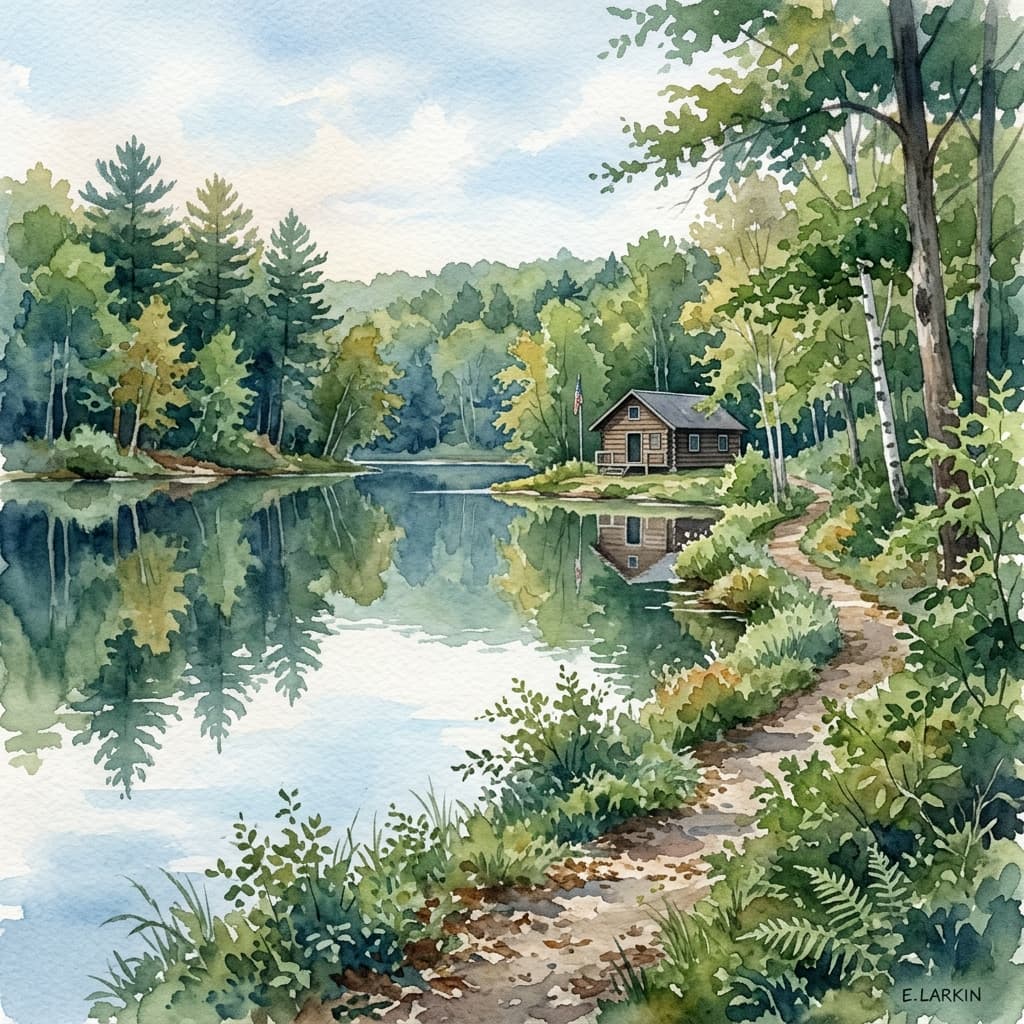
Inman Pond Loop
A 0.7 mile loop trail surrounding the eastern and southern edges of Inman Pond.
What you might spot
 Wildlife
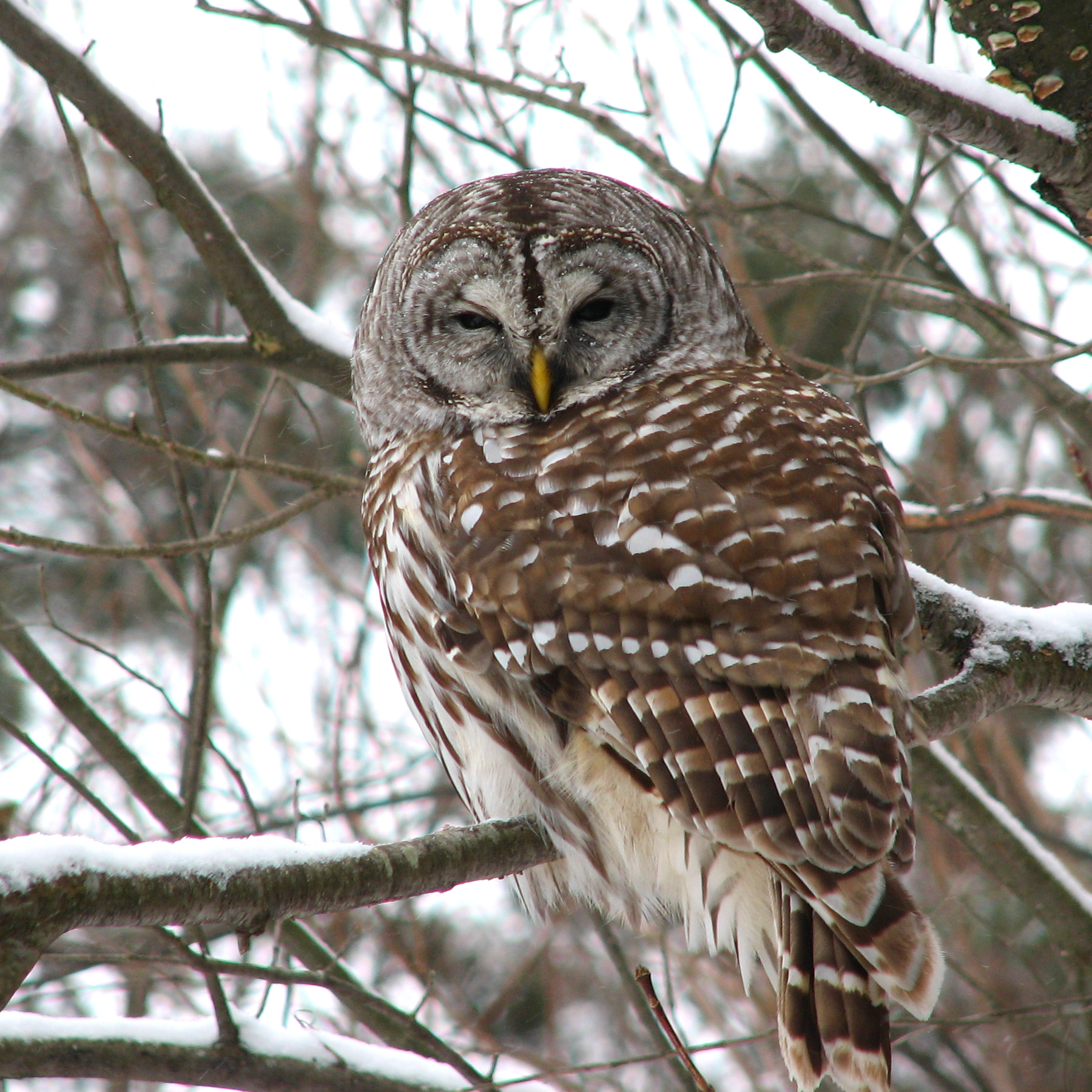
Barred Owl
Strix varia
Large brown-and-white owl with dark eyes; classic “Who cooks for you?” call at dawn and dusk. Often perches low along wooded streams.
Year-round resident; most vocal late winter through early spring
📍 Quissett Wildlife Management Area — wooded wetlands along the East Trail, Round Meadow, and Old Quissett corridors.
 Wildlife
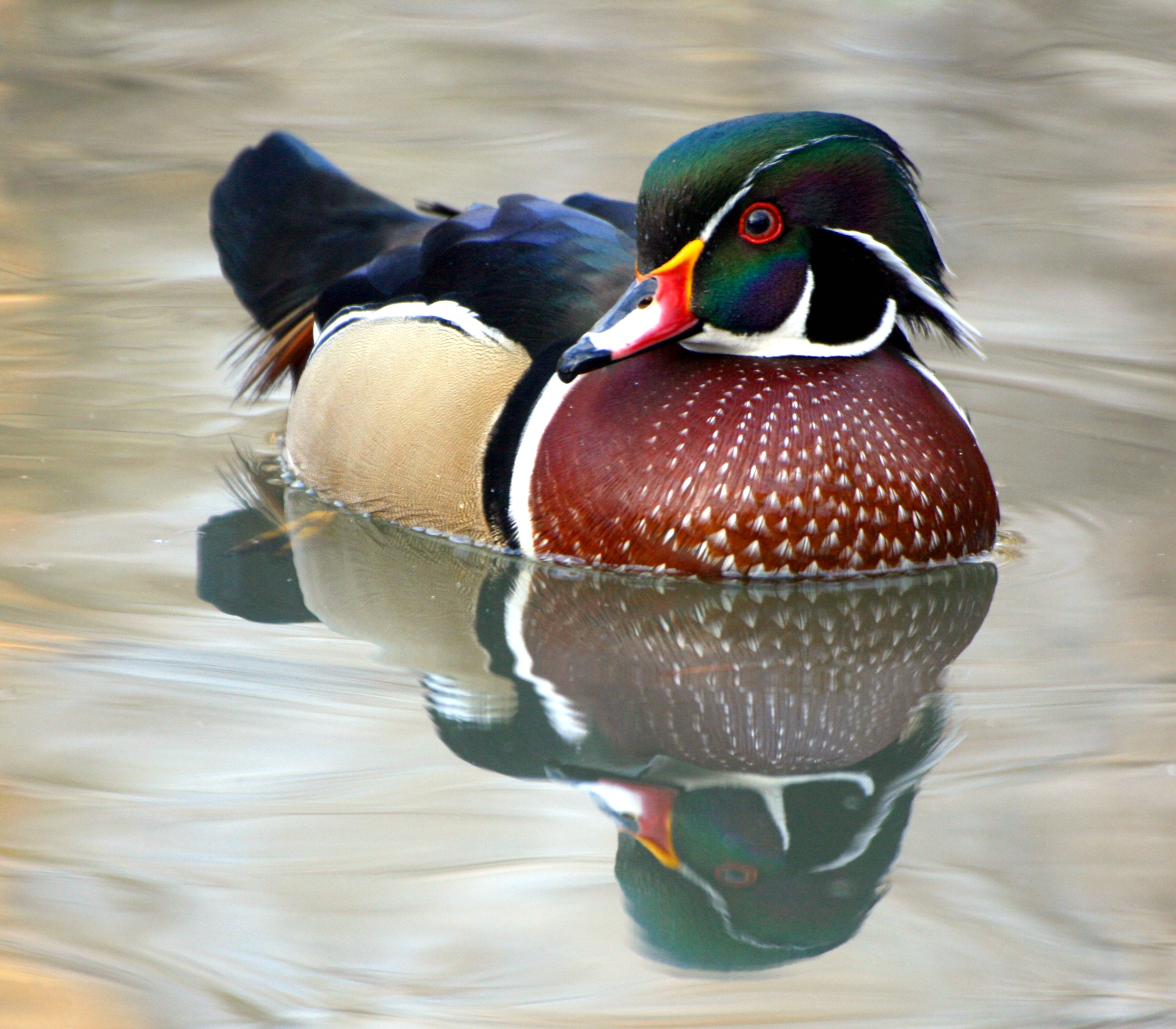
Wood Duck
Aix sponsa
Male: iridescent green head with bold white face stripes. Female: gray-brown with teardrop eye-ring. Listen for squealing flight calls at dusk.
Spring migration and nesting; broods on Mendon ponds May–July
📍 Inman Pond and associated beaver impoundments in the Meadow Brook Woods complex.
 Wildlife
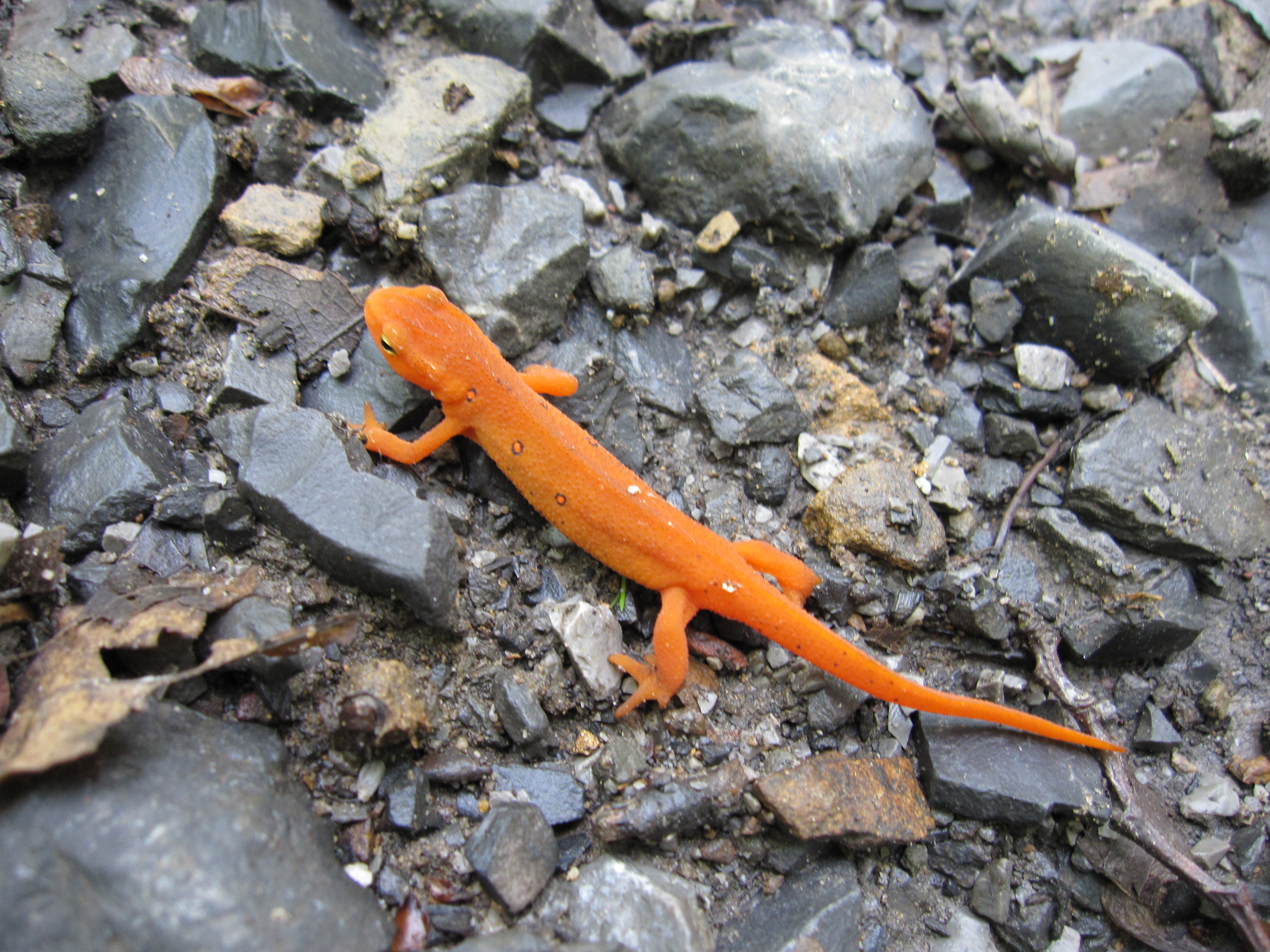
Eastern Newt (red eft)
Notophthalmus viridescens
Terrestrial “red eft” stage: bright orange-red with darker-bordered spots — slow-moving on trails after rain. Do not handle; oils on skin can harm amphibians.
Efts common April–October; adults in pools early spring
📍 Meadow Brook corridor — kettle topography and seasonal wetlands support pool-breeding amphibians.
 Plant
PlantCinnamon Fern
Osmundastrum cinnamomeum
Large vase-shaped clumps; fertile fronds emerge first, turning cinnamon-brown and spore-bearing by early summer. Sterile fronds stay green with a tuft of cinnamon-colored wool at each pinna base — the reliable field mark.
Fronds emerge April; fertile fronds visible May–June; green through October
📍 Meadow Brook Woods — dense clumps line the boardwalk sections and beaver-impounded swamp edges; one of the most visible plants on the Inman Pond loop.
 Plant
PlantSwamp Azalea
Rhododendron viscosum
Deciduous shrub with clusters of white (sometimes pale pink), tubular, intensely fragrant flowers; sticky-hairy tubes are the key field mark separating it from other native azaleas. Blooms after leaves are out — mid-summer, later than Mountain Laurel.
Blooms late June through July along Mendon wetlands
📍 Quissett WMA — lines the shrub-swamp margins of the East Trail corridor; the fragrance carries on warm mornings in July.
 Plant
PlantSkunk Cabbage
Symplocarpus foetidus
Mottled purple-green spathe (hood) emerges directly from mud in late winter — often pushing up through ice. Giant cabbage-like leaves follow in April. Generates heat (thermogenesis) to melt surrounding snow. Unmistakable skunky odor when crushed.
Spathe February–March (earliest wildflower in Mendon); leaves April–July
📍 Meadow Brook Woods — seep hollows and stream-margin flats along the lower Inman Pond corridor; look for spathes rising from standing water in late February.
 Wildlife
Great Blue Heron
Ardea herodias
Largest heron in North America; stands 4 feet tall with a slate-blue back, white face, and black eye-stripe. Flies with neck folded in an S-curve — diagnostic in flight. Hunts fish and frogs by standing motionless in shallows.
Year-round in Mendon; most conspicuous March–October at open water
📍 Inman Pond and Meadow Brook Woods impoundments — reliable year-round; often seen standing in the shallows at the pond's open edge visible from the loop trail.
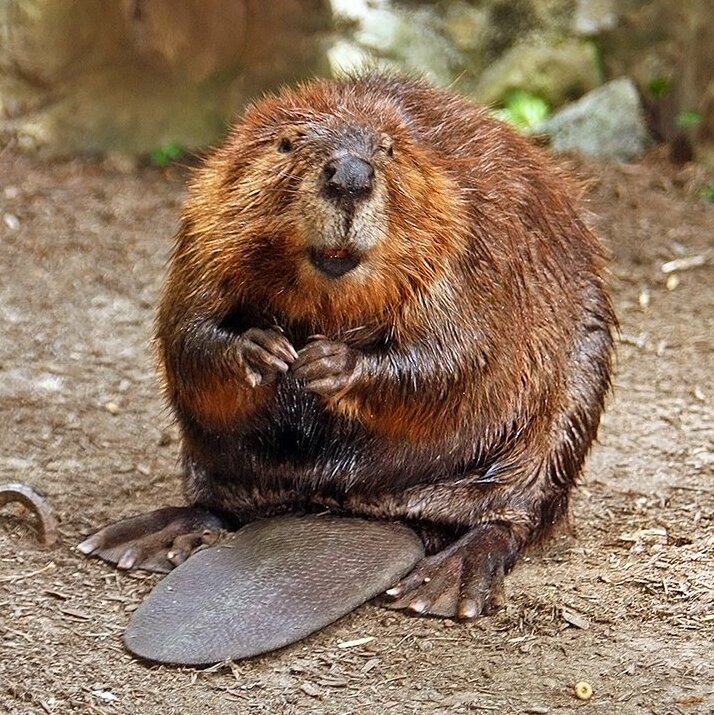 Wildlife
North American Beaver
Castor canadensis
North America's largest rodent; paddle-shaped tail and large orange incisors. Active at dawn and dusk — look for the V-shaped wake as it swims. Evidence is often easier to find than the animal: gnawed stumps, mud-and-stick lodges, and bark-stripped sticks in water.
Year-round; most visible at dawn and dusk spring through fall
📍 Quissett WMA — beaver activity is responsible for the impoundments along the East Trail and Beaver Pond Loop; active lodges and fresh gnaw-cuts are visible from the trail.
 Wildlife
Spotted Salamander
Ambystoma maculatum
Stout, dark (charcoal to black) body with two rows of bright yellow spots from head to tail. Adults reach 7–9 inches. Lives underground most of the year — emerges explosively on the first warm (above 45°F) rainy nights of late March to reach vernal pools.
Annual spring migration late March; egg masses in pools April–May; adults rarely seen other times
📍 Meadow Brook Woods — the kettle topography and certified vernal pools along the Inman Pond corridor are prime spotted salamander breeding habitat; egg masses visible in pools in April.
 Wildlife
Painted Turtle
Chrysemys picta
Smooth, olive-to-black shell with red and yellow markings on the marginal scutes; red-striped neck. New England's most familiar basking turtle — lines up on logs and emergent vegetation on warm days, drops into water when approached.
Active April through October; basking most visible on sunny days May–September
📍 Gaskill Meadows — open impoundment provides ideal basking structure; rows of painted turtles often visible on sunny afternoons from the trail.
History in this area
Blackstone Heritage Corridor Era
1986Mendon's inclusion in the Blackstone River Valley National Heritage Corridor connected local conservation to a wider regional preservation strategy.
LAND, CPA, and the trail network you walk
How state and local programs helped stitch together the interconnected preserves the Town lists today.
Mendon Hike Challenge
This trail is part of the official Mendon Hike Challenge (Hike 6: Wigwam Brook — Cormier/Meadow Brook Loop).
View the full challenge →Permitted uses
Town of Mendon Conservation Land.
Surfaces
Accessibility
Max grade
3%
Firm surface
60%
Flatter earthen and boardwalk path.
History
Passes the Mendon Boy Scouts preserved Cabin on the western edge of the pond.