
Taft Mill and Industrial Mendon
Follow Town Forest landmarks that connect Taft family homestead life, local milling, and Mendon's industrial-era landscape.
View route on map
Opens the interactive map with this story's route and stops
- 1
Taft Main House
Begin where the Taft family homestead anchored this section of Mendon.
colonial
Taft Main House
The Taft Main House marks the residential center of the Taft family's historic landholdings, which form a significant portion of today's Town Forest.
- 2
Taft Mill
Water-powered milling illustrates how work and landscape were tied together here.
industrial
Taft Mill
Noted on the Town Forest map, the Taft Mill represents Mendon's early industrial efforts utilizing local water power.
- 3
Dance Hall / Grist Mill
This site ties community life to the same rural industry that shaped the trails.
industrial
Dance Hall / Grist Mill
Located in the Town Forest, this site served as both a grist mill and a community dance hall, highlighting the blend of commerce and social life in the rural landscape.
- 4
Regional Mill Context
Close by connecting the Town Forest mills to Mendon's broader early milling history.
colonial · 1664
Albee's Grist Mill and King Philip's War
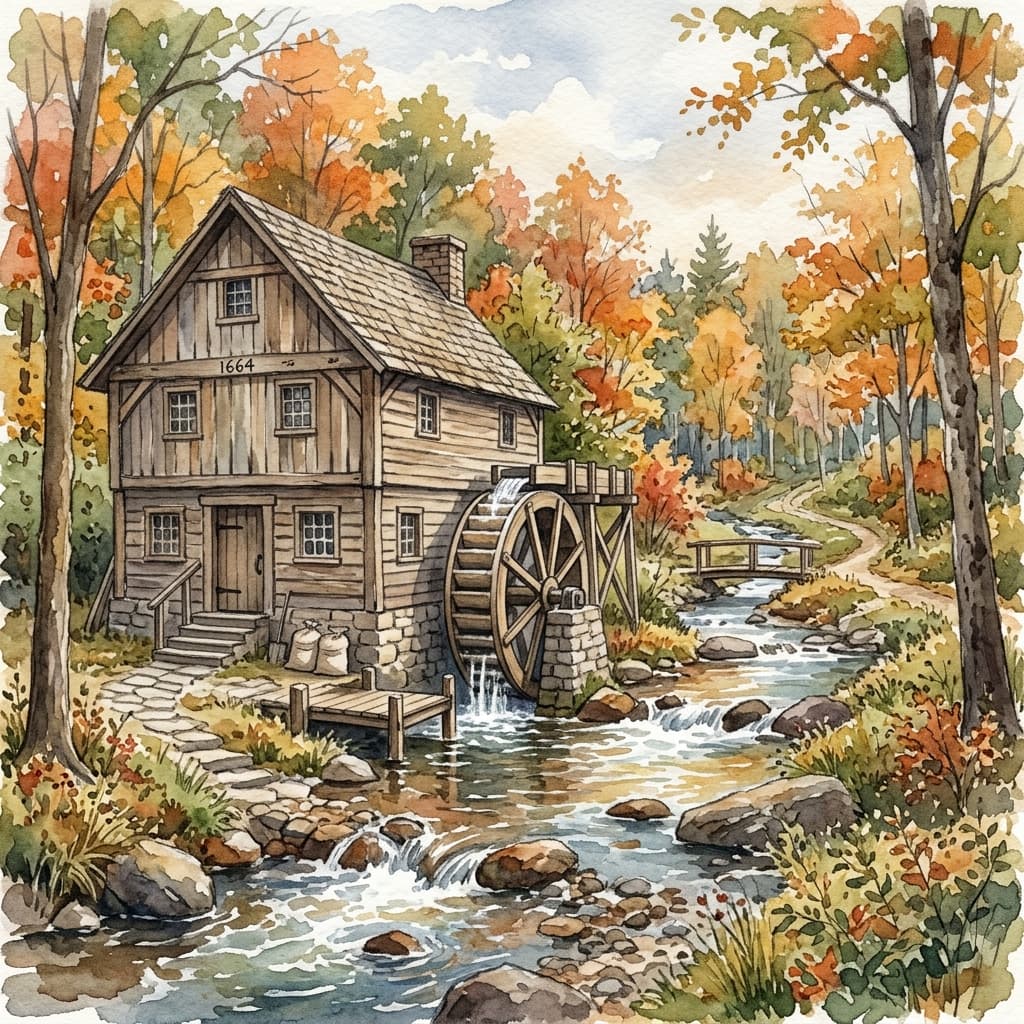
Albee's mill is cited as the first water-powered grist mill in the immediate region. On July 14, 1675, Nipmuc warriors led by Matoonas fell upon colonists working in a field — historians record it as the first settler blood shed in King Philip's War within the Massachusetts Bay Colony. By February 1676, Indians had burned all the dwellings and the meeting house; twelve years of settlement were swept away in hours. Matoonas was later bound to a tree on Boston Common and shot by men of his own tribe as war's price. Resettlement began by 1678–1680, shaping the rebuilt community that followed.